
What Makes Indian Handcrafted Gifts Unique?

Indian craftsmanship has long held a distinct place in global material culture. Objects shaped by hand carry histories of region, community skill, and everyday ritual. These pieces differ from mass-produced items because each one reflects the decisions of individual artisans working with local materials and inherited techniques. Understanding this difference helps explain why such objects continue to matter in personal and collective exchange.
Cultural Foundations of Handcrafted Gifts
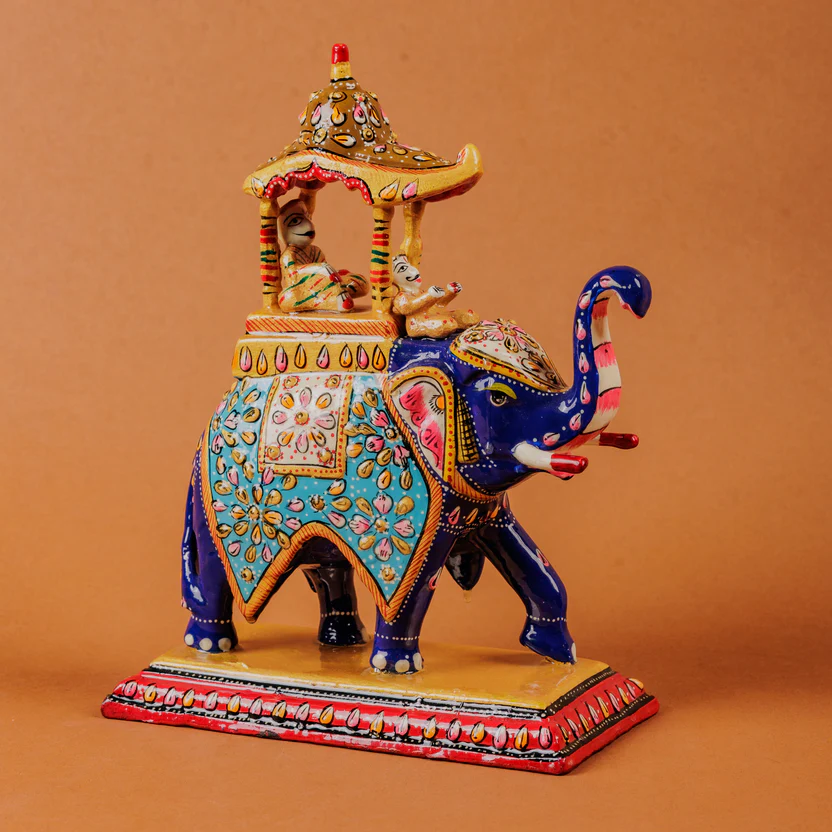
Across many parts of India, making objects by hand has been tied to social roles, seasonal cycles, and religious practice for centuries. Wood carving in certain forested belts, metalwork in traditional foundries, and textile weaving on household looms all developed as responses to available resources and community needs. Academic studies of material culture note that these practices transmit knowledge through observation and repetition rather than formal manuals. The resulting objects therefore contain small variations that mark them as products of human attention rather than machine uniformity. When people select Handcrafted Gifts, they often choose items that carry this layered background of skill and place.
Regional Diversity in Materials and Methods
India’s ecological and cultural variety produces a wide range of craft expressions. Clay from riverbanks becomes terracotta figures in one region while block-printed cotton from another reflects patterns linked to local flora. Brass and copper vessels show different surface treatments depending on the metalworking traditions of particular towns. Stone inlay work, lacquerware, and embroidery each follow techniques refined over generations within specific communities. Scholars of South Asian arts observe that this regional specificity resists homogenization. A single object can signal both its place of origin and the particular hand that finished it. Such variety allows gifts to communicate more than utility; they can also convey belonging to a particular landscape or social group.
Role of Skill Transmission in Sustaining Quality
Most traditional crafts rely on apprenticeships within families or workshops. Young learners begin with simple tasks and gradually master more complex stages of design, preparation, and finishing. This long process builds muscle memory and judgment that machines cannot easily replicate. Research in craft anthropology highlights how such training produces consistency of quality without eliminating individual variation. Slight differences in tool pressure, dye saturation, or carving depth become signatures rather than flaws. The result is an object that feels intentional. Buyers who value these qualities often seek pieces that show clear evidence of this human process.
Considerations for Bulk Gifting in Contemporary Settings

Organizations and families sometimes need to present many items at once. In such cases, the choice of handcrafted work introduces practical questions of scale, consistency, and sourcing. Artisan cooperatives and producer groups have developed methods to fulfill larger orders while preserving core techniques. They may standardize certain dimensions or color ranges yet leave surface details to the individual maker. This balance allows Bulk Gifting to retain the character of handmade production rather than collapsing into purely industrial output. Careful planning around lead times, material availability, and fair compensation remains essential for the arrangement to remain viable for the makers themselves.
Significance of Diwali Gifts for Family Traditions
Festivals create concentrated moments of exchange. Diwali, with its emphasis on light, renewal, and shared presence, has long involved the giving of objects that mark care and continuity. Within households, selected items often move between generations or across extended kin networks. Choosing pieces made by hand can reinforce the sense that the gift carries more than monetary value. Academic accounts of festival economies note that such exchanges help maintain social ties and transmit aesthetic preferences. When families select Diwali Gifts for Family, they often look for items that reflect the occasion’s reflective mood and can be kept or used beyond a single celebration.
Ethical Dimensions of Production and Exchange
Interest in handmade objects has grown alongside broader discussions of labor conditions and environmental impact. Many traditional crafts use renewable or locally sourced materials and generate less industrial waste than large-scale manufacturing. At the same time, market demand can place pressure on artisans to increase output or alter designs. Ethical frameworks drawn from development studies emphasize transparent pricing, safe working conditions, and the preservation of decision-making power within craft communities. Informed buyers who seek accurate information about origin and process contribute to arrangements that support rather than extract from these communities. Clarity about materials, techniques, and the people involved remains a practical standard for responsible exchange.
Aesthetic Qualities That Distinguish Handmade Work
Beyond cultural and ethical considerations, handcrafted objects often display surface qualities difficult to achieve through mechanical means. Slight irregularities in weave, tool marks on wood or metal, and variations in natural dyes create visual and tactile interest. These features reward close attention. Design historians point out that such qualities invite slower forms of appreciation compared with the uniform finish of industrial products. In everyday use, a hand-finished vessel or textile can accumulate personal associations more readily because its physical presence already signals care in making. This accumulation of meaning over time forms part of what keeps handmade objects valued within households.
Practical Aspects of Selection and Care
Choosing suitable pieces involves attention to function, durability, and context of use. A wooden tray must withstand regular handling; a textile should suit the climate in which it will be used; metalwork may require specific cleaning methods. Knowledge of traditional finishes helps buyers maintain the objects without damaging them. Many craft traditions include guidance on care that has been refined through long practical experience. Matching the object to its intended setting increases the likelihood that it will remain in active use rather than stored away. This practical continuity supports the ongoing relevance of the craft itself.
Continuity and Change in Contemporary Practice

Craft communities continue to adapt while retaining core techniques. Some artisans incorporate new tools for efficiency in preparatory stages yet complete finishing steps by hand. Others experiment with contemporary forms while drawing on established motifs. Academic observers note that such selective change often strengthens rather than weakens the craft, provided the makers retain control over the process. Market interest that values authenticity without freezing traditions in place creates space for this evolution. The resulting objects remain recognizably connected to their histories while meeting present needs.
Conclusion
Indian handcrafted gifts stand apart because they combine regional materials, long-transmitted skills, and the visible presence of human decision-making. Their uniqueness lies less in rarity alone than in the density of cultural, technical, and ethical information each piece can carry. From the quiet variations left by individual hands to the broader networks of knowledge that sustain production, these objects offer more than surface appeal. When selected with attention to origin, process, and suitability, they continue to serve as meaningful participants in personal and collective life. Understanding the conditions that produce them allows both makers and recipients to engage with the work on terms that respect its full context.
Frequently Asked Questions (FAQs)
Que. What defines an object as genuinely handcrafted in the Indian context?
Ans. An object is generally considered handcrafted when the primary forming, finishing, or decorative stages rely on manual skill rather than fully automated machinery. Regional traditions, local materials, and knowledge passed through practice further support this classification.
Que. How do regional differences influence the character of these objects?
Ans. Climate, available raw materials, and historical trade routes shape distinct techniques and visual languages. A textile from one area may emphasize certain dyes and weaves, while metalwork from another prioritizes different alloys and surface treatments.
Que. What practical factors should be considered when arranging larger numbers of such items?
Ans. Lead times for production, consistency of dimensions where needed, fair compensation structures, and clear communication with producer groups help ensure that scale does not undermine the handmade qualities that define the work.
Que. Why do festival exchanges often feature objects made by hand?
Ans. Festival periods emphasize continuity and shared presence. Hand-finished pieces can carry associations of care and place that align with the reflective and relational character of many traditional celebrations.
Que. How can buyers support ethical conditions in craft production?
Ans. Seeking transparent information about materials, labor practices, and pricing, and preferring arrangements that leave decision-making with the artisans themselves, contributes to more sustainable and respectful exchanges.


Comments