
What Makes Handmade Gifts in India Meaningful?
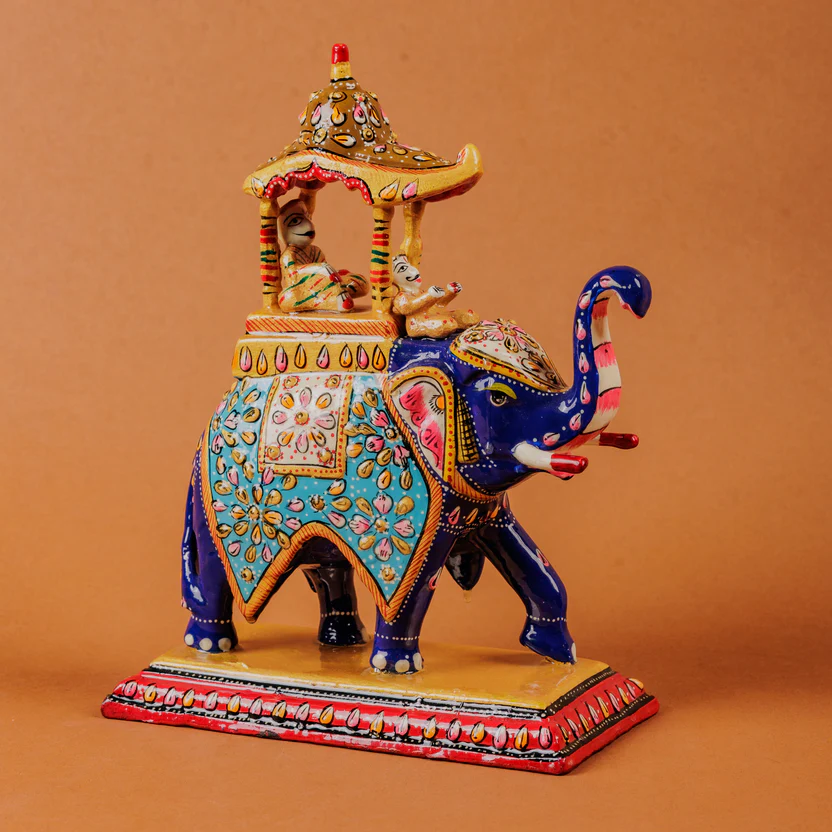
Objects shaped by hand carry traces of decision, material response, and sequential skill. Across India, artisans work with metal, textile, clay, wood, and fibre to produce items that serve both practical and symbolic purposes. The meaning attached to Handmade Gifts in India arises from this visible process rather than from uniform industrial output. Buyers who examine technique, material integrity, and cultural fit can recognise why such pieces retain significance in personal, festive, and institutional contexts.
Material and Process Foundations of Handmade Gifts in India
Hand production leaves evidence of individual attention. Slight variations in surface texture, weight, or line quality indicate that each piece passed through controlled yet non-mechanical stages. Metal chasing, block printing, embroidery, pottery forming, and wood carving each impose their own quality markers. Evenness of finish, secure joins, and accurate proportions signal competent execution. These markers help distinguish work that reflects sustained skill from items that only imitate hand appearance.
Material choice further shapes meaning. Durable alloys, colourfast dyes, well-fired clay, and properly seasoned wood support longevity. When an object continues to function or display well after the initial exchange, its value extends beyond the moment of giving. This continuity of use reinforces the sense that the gift was selected with care.
Technical Continuity Across Regions
Many techniques practised today rest on knowledge transmitted through apprenticeship and repeated workshop practice. Centres specialising in particular crafts maintain standards that allow both single pieces and larger batches to retain recognisable character. Consistency across a group of items depends on organised teams and clear finishing protocols rather than on the elimination of all variation.
Buyers seeking the Best Handcrafted Wholesale Gifts in India often evaluate this balance. Acceptable variation within a batch demonstrates hand process, while excessive deviation signals incomplete control. Workshops that manage both individual quality and batch reliability support a wider range of gifting needs without erasing the marks of making.
Festival Contexts and Symbolic Association
Seasonal celebrations generate demand for objects that align with shared visual and symbolic languages. Bright metallic surfaces, auspicious motifs, and forms linked to light or prosperity appear frequently in collections assembled for major festivals. Secure construction remains essential so that decorative elements survive transport and subsequent handling.
Diwali Gifts illustrate these expectations clearly. Items intended for this occasion often combine reflective finishes with practical forms such as trays, containers, or small accent pieces. When the decorative work is integral to the structure rather than loosely applied, the object retains both visual impact and lasting utility. The hand process contributes to the sense that the gift participates in the cultural rhythm of the festival rather than standing apart from it.
Institutional and Professional Applications

Organisations and formal events require gifts that communicate appreciation while remaining broadly acceptable. Restraint in design, durability of materials, and ease of packaging become practical criteria. Pieces that travel well and present cleanly on arrival reduce logistical friction for bulk distribution.
Handcrafted Corporate Gifts in India frequently draw on the same regional skill sets used for personal items, adjusted for volume and consistency. Metal forms with clear finishes, textile elements with stable colour, and modest ceramic or wooden accents appear in many institutional selections. The presence of handwork supplies a layer of distinction without requiring elaborate customisation for every unit.
Cultural Resonance and Regional Character
Meaning deepens when form or motif connects to recognised local traditions. Metalwork, printed textiles, pottery, and carved wood each carry visual languages associated with specific centres. Selecting pieces that display coherent regional character strengthens the link between the object and its place of origin. At the same time, competent execution prevents traditional references from appearing formulaic or poorly resolved.
The diversity of Indian craft ecosystems allows complementary items to be sourced from different workshops while remaining within a shared aesthetic range. This flexibility supports both single thoughtful gifts and larger coordinated sets.
Ethical Dimensions of Hand Production
The continued availability of skilled work depends on viable conditions for artisans. Transparent pricing that reflects labour and material costs, along with attention to workshop standards, supports the transmission of technique across generations. Buyers who enquire about origin and process contribute to more sustainable patterns of demand.
Ethical considerations also influence long-term meaning. An object whose production respects the people and resources involved carries an additional layer of integrity. This dimension becomes especially relevant when gifts move into professional or public contexts where scrutiny of supply chains has increased.
Practical Evaluation for Different Scales
Selection criteria shift according to purpose. Personal gifts may emphasise unique surface detail or symbolic resonance. Festival selections prioritise visual alignment with the occasion and secure construction. Wholesale or institutional orders require demonstrable consistency across quantities while preserving evidence of hand process. Packaging, weight, and ease of transport further refine practical choices at larger scales.
Examining multiple examples from the same source helps establish the normal range of variation. Handling the object, checking joins or closures, and assessing surface evenness reveal qualities that static images may understate. These direct checks remain useful whether the purchase involves one item or many.
Integration of Criteria into Coherent Choice

No single attribute guarantees a meaningful gift. Technique, material integrity, occasion suitability, regional character, and ethical awareness interact. Pieces that satisfy several of these dimensions simultaneously tend to retain significance after the exchange. The hand process supplies the foundation; cultural fit and durable construction extend the object's presence in daily or ceremonial life.
Workshops across India demonstrate how these elements can coexist. The capacity to produce refined single pieces alongside reliable larger quantities, to adapt traditional methods to contemporary formats, and to work with lasting materials explains the continued relevance of handcrafted objects for varied gifting purposes.
Conclusion
Meaning in handmade gifts arises from visible skill, appropriate materials, and alignment with the social or cultural moment of giving. Handmade Gifts in India retain significance because they record sequential human decisions rather than uniform mechanical output. Categories such as the Best Handcrafted Wholesale Gifts in India show how batch consistency can coexist with hand character. Diwali Gifts illustrate the successful joining of symbolic form and secure construction for festival use. Handcrafted Corporate Gifts in India adapt the same regional capacities to institutional requirements of durability and presentability. By examining technique, material, context, and production conditions together, buyers can identify objects that continue to carry value beyond the initial exchange.
Frequently Asked Questions (FAQs)
Que. What primary quality should be examined in Handmade Gifts in India?
Ans. Evidence of controlled hand technique combined with durable, appropriate materials forms the essential foundation for lasting meaning.
Que. How can Best Handcrafted Wholesale Gifts in India retain hand character at larger volumes?
Ans. Workshops that apply consistent finishing standards while allowing limited natural variation preserve signs of hand process across a batch.
Que. Why do Diwali Gifts often feature metallic or reflective elements?
Ans. Such surfaces align with the festival's association with light and prosperity while remaining compatible with secure, functional forms.
Que. What practical factors matter most for Handcrafted Corporate Gifts in India?
Ans. Durability, restrained design, reliable packaging, and consistency across units support both presentation and logistical ease.
Que. Does regional origin add meaning to a handmade gift?
Ans. Coherent links to recognised local techniques and visual languages strengthen the connection between the object and its cultural context when execution remains competent.


Comments